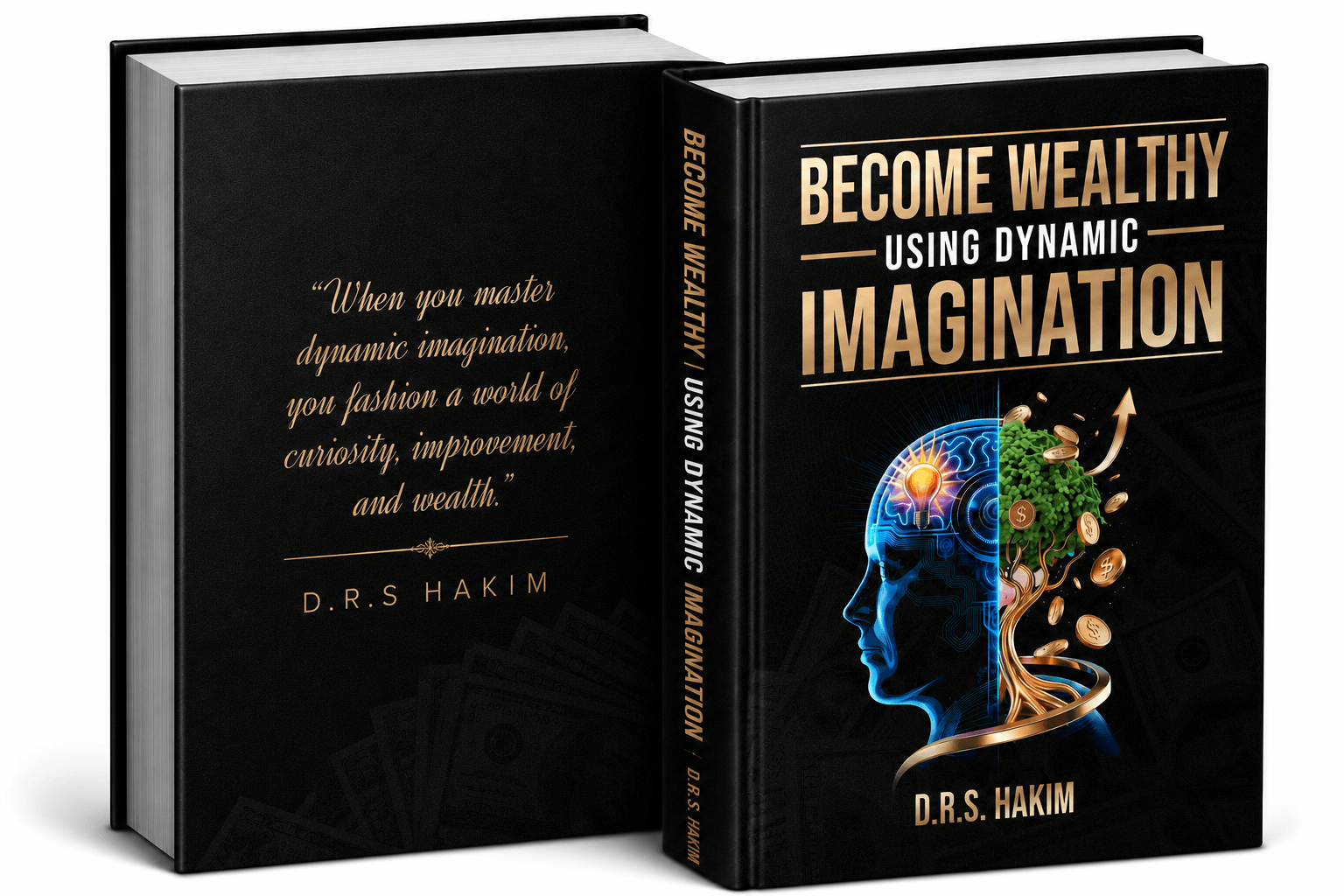
Become Wealthy Using Dynamic Imagination

$499.95

Category:
Description

Throughout history, the individuals who transformed industries, civilizations, economies, and entire generations were rarely limited by circumstances alone. They possessed the ability to perceive possibilities beyond visible conditions and mentally construct realities long before those realities physically emerged.

BECOME WEALTHY USING DYNAMIC IMAGINATION explores how disciplined imagination functions as one of the most powerful wealth-producing forces available to humanity when properly aligned with emotional intelligence, neurological conditioning, foresight, and structured execution. This work was written for readers who recognize that wealth is not governed solely by income, luck, or opportunity, but by internal mental architecture capable of anticipating, organizing, adapting, and innovating before the external world responds. Through retraining the brain and heart for financial success, the reader is guided into deeper levels of awareness where imagination evolves from passive fantasy into disciplined vision, strategic foresight, adaptive intelligence, and wealth-generating creativity.

The text explores the neurological relationship between imagination, neuroplasticity, innovation, emotional resilience, cognitive flexibility, and financial advancement. Readers are progressively shown how fear, doubt, limiting beliefs, emotional exhaustion, procrastination, and subconscious scarcity conditioning suppress imaginative capacity and weaken wealth-building behavior. As the internal system recalibrates through brain, heart, and gut triadic alignment, imagination begins to function with greater structure, confidence, imaginative foresight, adaptability, and purpose. Throughout the work, you will encounter discussions surrounding inventors, innovators, entrepreneurs, scientific imagination, creative intelligence, visualization, vertical integration, technological leverage, crisis adaptation, research development, and the economic power of foresight. The book demonstrates how imagination influences not only innovation but also emotional endurance, strategic adaptation, opportunity recognition, and long-term financial sustainability.

Rather than encouraging unrealistic optimism, this work systematically trains readers to strengthen disciplined thought patterns that can reorganize perception, decision-making, emotional regulation, and problem-solving. Self-sabotaging tendencies such as hesitation, indecision, excuse-making, fear of uncertainty, and passivity gradually weaken as the reader develops a more adaptive and stronger imagination based on a solid foundational structure.

As the chapters unfold, imagination is reframed not as an escape from reality, but as the force that redesigns reality itself. Readers are immersed in historical examples, scientific principles, entrepreneurial systems, visualization methods, and cognitive exercises intended to strengthen innovative thinking and expand wealth consciousness through measurable psychological transformation. This work ultimately presents imagination as a disciplined neurological and emotional process capable of reshaping the reader’s internal world and external outcomes simultaneously. By retraining the brain and heart through dynamic imagination, you develop stronger awareness, heightened adaptability, emotional resilience, innovative perception, and greater capacity to recognize, organize, and sustain wealth-producing opportunities.

Throughout this work, you will encounter numerous historical examples, entrepreneurial case studies, innovation stories, scientific discoveries, and real-world illustrations demonstrating how imagination, creativity, adaptability, and foresight have shaped extraordinary achievements across industries and generations. You will examine the lives of inventors, innovators, visionaries, entrepreneurs, and organizations that transformed ideas into lasting value, as well as examples of individuals and institutions that failed to adapt, innovate, or recognize emerging opportunities. These examples reveal how disciplined imagination, strategic thinking, and innovative awareness initiate and foster financial advancement, while limited thinking and resistance to change frequently result in missed opportunities and unrealized potential.

Please note that this work is centered upon transforming imagination into disciplined innovation, adaptive intelligence, and measurable financial advancement. Throughout this book, challenges such as fear, doubt, procrastination, hesitation, limited thinking, emotional exhaustion, scarcity conditioning, and self-sabotaging behavioral patterns are systematically examined alongside practical psychological and strategic solutions designed to retrain the brain, heart, and gut toward greater alignment, creativity, resilience, foresight, and wealth-oriented thinking in order to activate imaginative powers for wealth possession, investment, and charitable giving. Readers will learn how to recognize and resolve destructive internal patterns, strengthen innovative awareness, improve decision-making, expand imaginative capacity, and transform restrictive thinking into disciplined action, emotional resilience, and intentional wealth-building behavior. Whether you are an entrepreneur, student, professional, inventor, visionary, or individual seeking personal and financial reconstruction, this book was written to transcend cultural, social, educational, ethnic, and economic boundaries. You may begin noticing shifts in awareness, motivation, discipline, emotional perception, and thought patterns within a relatively short period of engagement, in some instances beginning from the very first day of reading and consciously applying the principles explored throughout this work. Through consistent reflection and application, restrictive thought patterns gradually give way to an advanced cognitive capacity, emotional resilience, innovative awareness, strategic thinking, disciplined execution, and sustainable wealth-building behavior.

12 Dynamic Wealth-Reorienting Principles Presented Throughout This Book

    • Why is imagination one of the most valuable wealth-producing assets in human history? 
    • Why your brain and heart must be retrained to foster imagination, allowing you to think more creatively, strategically, and wealth-consciously?
    • How does intentionally altered neuroplasticity reshape your brain and heart for dynamic imagination, innovation, adaptability, and financial advancement? 
    • How to develop dynamic imagination to strengthen your confidence, foresight, and decision-making abilities.
    • How must you develop your dynamic imagination to influence your ability to recognize opportunities that others may overlook?
    • How to overcome fears, emotional exhaustion, and use the awareness of fear to promote your advancement.
    • How to develop a dynamic sense of visualization and a measurable behavioral transformation.
    • How to recognize and overcome conscious and subconscious scarcity conditioning, which weakens innovation and decisive action, and how to benefit through the awareness of this condition.
    • How to increase your emotional resilience, in order to maintain your ability to be creative, disciplined, and make long-term progress.
    • How to triadically retrain your brain, heart, and gut into a formidable force in order to transform your strong fundamental limiting beliefs into innovative awareness and purposeful action. 
    • Why developing strategic, dynamic imagination becomes an indispensable exercise for personal growth, innovation, and wealth creation.
    • How to transform negative criticism into motivation and discipline while simultaneously progressing relentlessly.


Additional information
Pages368
SizeBooks are 8 1/2 x 11 inch hardcover books
Reviews (0)

Reviews

There are no reviews yet.

Be the first to review “Become Wealthy Using Dynamic Imagination”

Your email address will not be published. Required fields are marked *

FAQ’s
Can patience actually make you wealthier?

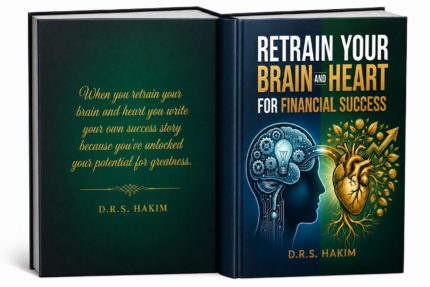
Book: Retrain Your Brain and Heart for Financial Success
Chapter 17: The Two Golden Keys – Patience & Appreciation
Section: The Power of Appreciation and Patience
Page: 372 

Appreciation is not merely an emotion—it is a measurable frequency that resonates through the body's energetic systems, influencing physiological and psychological states. Groundbreaking studies in heart-brain coherence, particularly those conducted by the HeartMath Institute, have demonstrated that when individuals intentionally focus on gratitude, their heart rhythms become more ordered and synchronized with brain wave patterns. This harmonious state of coherence enhances cognitive clarity, emotional stability, and decision-making capacity—each of which is a foundational pillar for financial success and personal empowerment.

Moreover, this coherent state generates a bioelectromagnetic field that extends beyond the physical body, subtly influencing the emotional and energetic states of others. This field fosters trust, collaboration, and mutual respect in economic relationships, creating a ripple effect of abundance. When individuals operate from appreciation, they emit PENs—Positive Essential Nutrients—that nourish their internal systems and attract opportunities aligned with their highest intentions. In contrast, when dominated by NATs—Negative Acidic Toxins—such as resentment, entitlement, or fear, the body's energy becomes chaotic, leading to inflammation, poor sleep, and impulsive financial decisions rooted in scarcity.

Patience, too, is a stabilizing force within the quantum field. It aligns the body's energy systems, reduces internal resistance, and allows for the natural unfolding of events without force or fear. Impatience, often fueled by NATs like anxiety and desperation, disrupts energetic flow and leads to reactive choices that sabotage long-term financial well-being. On the other hand, patience keeps individuals in a state of non-resistance, where they remain open to unexpected opportunities and aligned with their deeper intentions.

When you retrain your brain and heart for appreciation and patience, you recalibrate your internal frequency to one of prosperity, insight, and strength. This shift improves immune function, reduces systemic inflammation, and enhances restorative sleep cycles—it also influences the quantum field around you, shaping the circumstances you attract. While further empirical research is needed, these principles offer a compelling framework for understanding how emotional frequencies, when consciously cultivated, can transform outer financial realities.

What is the one asset that can never be stolen, taxed, or taken from you?

Book: Become Wealthy Using Dynamic Imagination
Chapter 1: The Incomparable Value of Imagination
Section: Defining Riches, Wealth, Dynamic Thinking, and Imagination
Page: 10

To understand imagination as the ultimate asset, one must examine its exquisite characteristics. Unlike material resources, it is not diminished by consumption, nor threatened by scarcity. Unlike gold or land, it cannot be stolen in the night or confiscated by decree. Unlike inherited privilege, it does not require approval, validation, or permission to operate. Even the poorest individual in the harshest environment can become the wealthiest in imagination, and through that wealth ascend to heights that astonish those still waiting for external circumstances to deliver a prosperous destiny. Imagination is a form of sovereignty, an inner kingdom where the brain and heart exercise dominion, free from the limitations imposed by one’s origin, environment, or current status.

Yet imagination alone does not guarantee transformation. Countless people throughout history have conceived wondrous ideas that never evolved beyond the private interior theater of contemplation. What separates the affluent creator from the eternally hopeful thinker is the intentional direction of imagination toward purpose. Wealth flourishes when imagination evolves into innovation, when abstraction solidifies into strategic action, when the mental picture becomes so persuasive that the aspiring achiever refuses to settle for less than its fulfillment. This transition, where thought becomes enterprise, where desire becomes execution, is the birthplace of fortunes. A dynamic imagination, therefore, is not merely inventive. It is driven. It is structured. It is organized around the vision of achieving prosperity not as a possibility but as a certainty.

Humanity’s history serves as a testament to this truth; the earliest humans who shaped stones into cutting instruments did not do so with the expectation of temporary improvement; they did so with a boldness that redefined survival and dominance. Those who tamed fire recognized not simply heat and brightness, but a revolutionary power that would transform shelter, nutrition, protection, and social development. The visionaries who carved wheels from wood saw beyond the circular form; they perceived the acceleration of civilization.

Why do some people recognize opportunities while others completely overlook them?

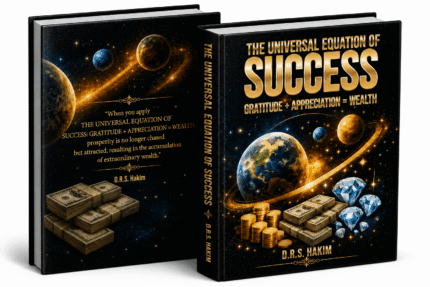
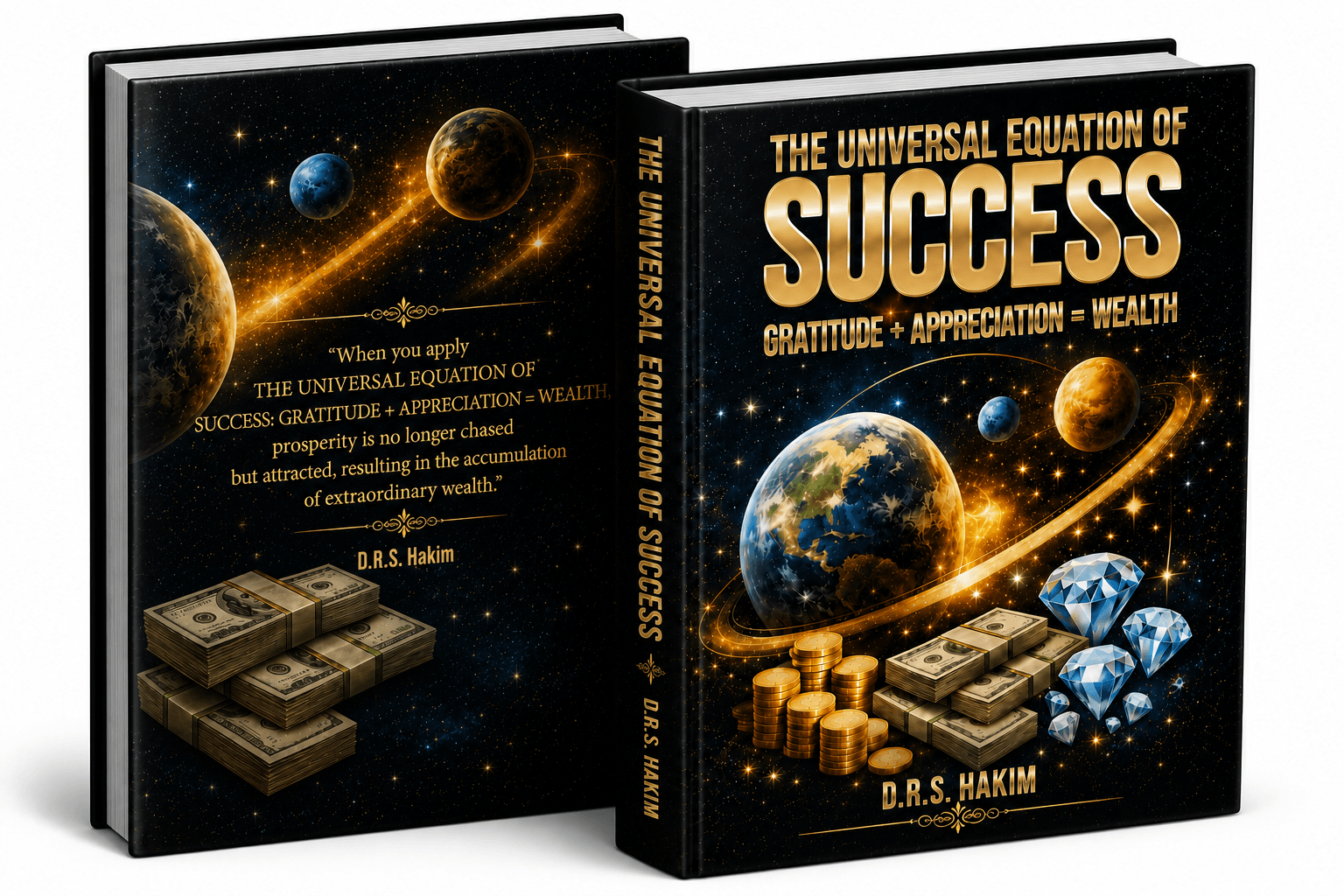
Book: The Universal Equation of Success: Gratitude + Appreciation = Wealth
Chapter 1: Defining Gratitude as an Internal State
Pages: 8–10

Gratitude exists prior to expression, transaction, or recognition from the external world, forming itself first as an internal emotional condition that shapes how value is perceived, processed, and retained. In Gratitude + Appreciation = Wealth: The Universal Equation of Success, gratitude is not treated as a reaction to events nor as a behavioral response expected by social convention, but as an internal state of awareness that arises within the brain and heart when value is emotionally recognized. This recognition does not require words, gestures, or compensation, yet it fundamentally determines whether such expressions will later carry authenticity or remain hollow. Gratitude, in its pure form, is the silent acknowledgment that something meaningful has entered one's experience, whether through contribution, opportunity, protection, learning, or benefit.

Gratitude as an internal state does not depend upon magnitude or circumstance, but upon perception and orientation. It is possible for two individuals to encounter identical conditions while experiencing entirely different internal responses, one registering recognition and the other registering deficiency. This divergence arises from how the brain and heart interpret meaning, rather than from the conditions themselves. Gratitude reflects an internal orientation toward recognition rather than entitlement, toward acknowledgment rather than demand.

The presence of PENs supports internal harmony by nourishing emotional balance and reducing internal friction. These nutrients strengthen the connection between the brain and heart, allowing recognition to remain consistent rather than situational. In contrast, NATs weaken this connection, introducing emotional noise that distorts interpretation and delays recognition. This distinction explains why individuals with similar skills, access, and intelligence often experience divergent outcomes over time. The difference does not originate solely from effort, but from the internal state through which effort is filtered and interpreted.

Gratitude, therefore, operates as a form of internal conditioning, shaping emotional readiness and perceptual accuracy. It trains the brain and heart to recognize benefit rather than fixate on absence, fostering an internal environment that remains open and responsive. This openness becomes essential for appreciation to function effectively later, as appreciation requires recognition to already be present. Without gratitude, appreciation lacks foundation. Without appreciation, wealth lacks response.

Why do some people spend their lives chasing wealth while others build systems that attract it?

The Art and Science of Capturing Wealth: From Creation to Preservation
Author: D.R.S. Hakim
Chapter 3: Build the Toll Booth: Strategic Positioning and Systems That Capture Wealth
Pages: 433–434

You are now entering a decisive phase where internal refinement gives way to external placement, and disciplined alignment must translate into deliberate economic positioning that determines whether value flows toward you or passes you by. This stage challenges you to move beyond effort-driven pursuits and begin building positions where value moves through the systems you have established. Economic systems function through movement, interaction, and necessary exchange, and those who position themselves within these flows gain consistent access to value without relying on constant pursuit or reactive decision-making. When you retrain your brain and heart, you begin to recognize that Negative Acidic Toxins (NATs) keep individuals focused on scattered opportunities, while Positive Essential Nutrients (PENs) guide the creation of structured positions where transactions, interactions, and exchanges pass through defined pathways repeatedly.

The concept of the toll booth reflects a structural principle within economic systems: value passes through a controlled point, allowing the owner of that point to capture wealth repeatedly without direct pursuit. This principle shifts focus from chasing opportunities to designing environments where interaction naturally occurs. As you move forward, your perspective on opportunity evolves from isolated effort to intentional placement within systems that guide economic movement. This transition emphasizes that positioning is not accidental; it is constructed, refined, and sustained through deliberate alignment with systems that convert activity into a continuous flow of value.

Throughout this chapter, you will discover that the greatest wealth creators rarely spend their lives chasing opportunity. Instead, they construct systems that allow opportunity to come to them. Whether through platforms, distribution networks, financial institutions, intellectual property, essential services, or strategic ownership, they place themselves where value already flows. Their success is not the result of luck, but of understanding movement, positioning, and structure. Once you begin to think in terms of building toll booths instead of chasing transactions, your entire perspective on wealth changes. You stop asking, "How can I work harder?" and begin asking, "How can I position myself so value flows through me consistently?" That shift is the beginning of capturing wealth rather than merely pursuing it.